Five Things I'll Always Love
Interiors edition.

Back in fashion school, my best friend and I had a refrain — “you love what you love”. Meaning, there is no point in fighting the things that make your heart sing, be it 90s tailoring, vintage Balenciaga, Tim Hortons coffee, or blaring Bryan Adams when you find yourselves alone in the sewing lab on a Friday evening.
Nearly 25 years later, the mantra holds true. While some of those things I no longer feel so strongly about (my taste in coffee has improved), some I still hold a candle for (the tailoring), and some (the Balenciaga, the BryAd, the bff) are evergreen.
Design-wise, the red threads of my life have, on examination, always been there. Visual seeds planted in childhood took root in adolescence and eventually wove their aesthetics across the Atlantic, through my various homes, relationships and passions.
Without further ado, five things this designer will (probably) always love, and why.
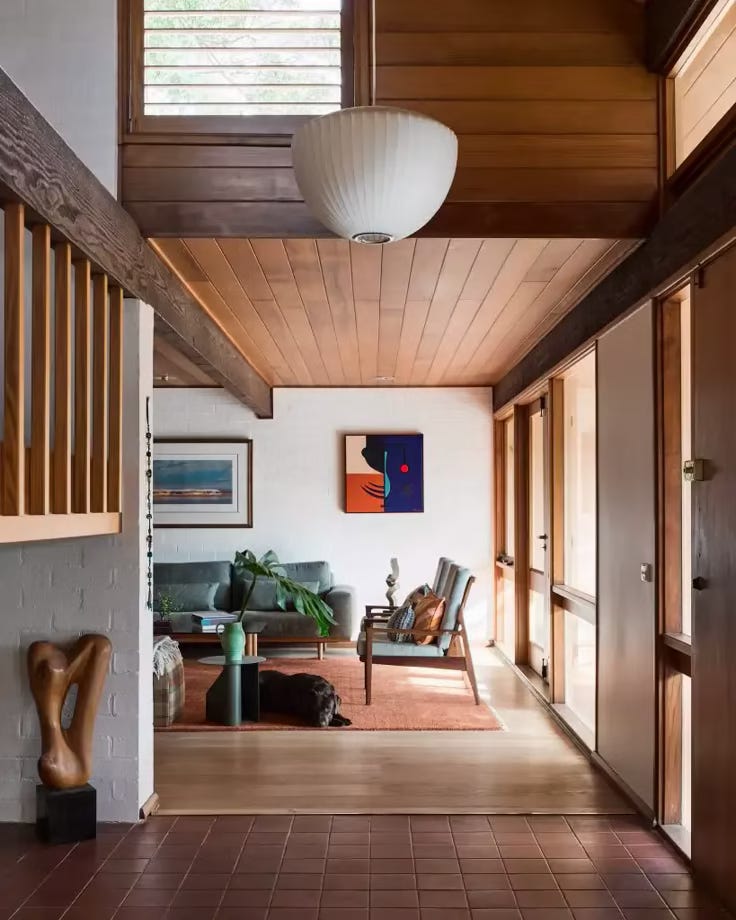
Mid-Century Architecture & Design
I know, I know — my elder millennial is showing. But I can’t quit this design style, no matter how dated Gen Z might proclaim it to be. If you’d ever walked into the home my grandparents lived in during my childhood, a 1970s split-level decorated to perfection with a mix of Scandinavian and Canadian teak from the 60s and 70s, you’d understand.
The hugely successful resurgence of MCM in the 2010s ultimately both helped (by introducing it to a new audience) and hurt (through overexposure and oversimplification) the style. I can see why, if you associate the look with tapered-leg West Elm furniture and cheap Urban Outfitter lamps, you might be ready for something new.
But for those of us who knew the real thing — the purity in those shapes, the colour, the warmth, the soul — mid century design feels like home. I may live in a classic South London 1930s semi now, but my forever home — still out there, as yet unsearched for — is a mid-century one, I’m sure of it.
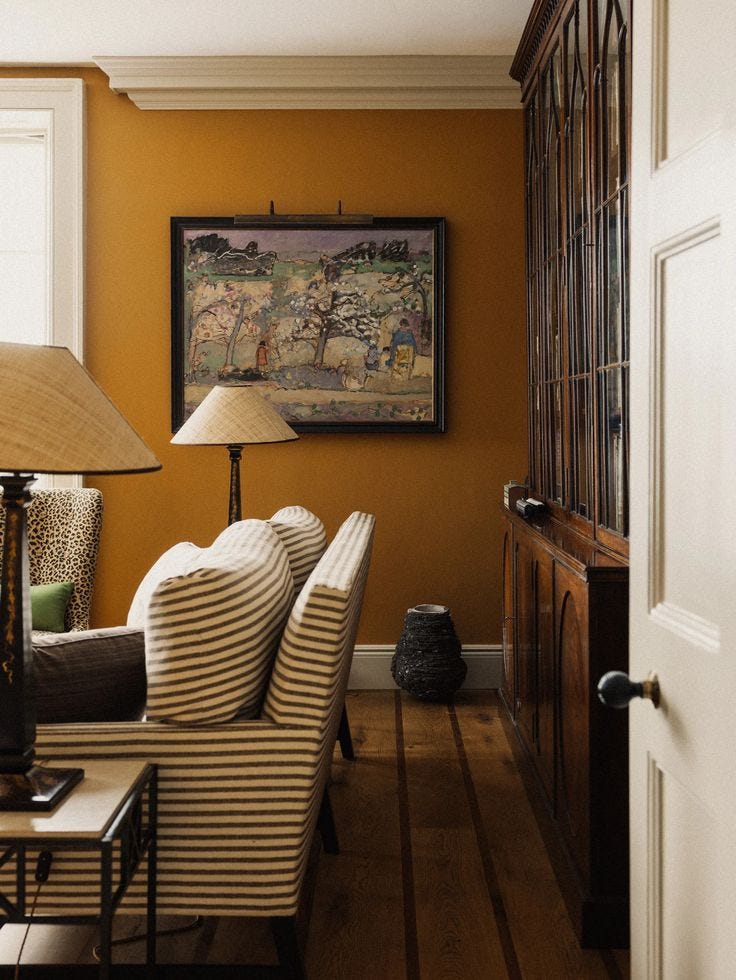
Ochre
This one goes beyond interiors, into fashion as well. I think I was still a teenager when one of my best friends casually referred to mustard yellow as my “signature colour”. And while I’ve since realised it’s not the most flattering shade next to my face (alas I’m a Soft Autumn, not a Warm Autumn), I still love using this colour in my home.
In my old flat it was the pendant light on the landing, our bedroom art wall and my bathroom floor. In this home, it’s the front door and living room rug. In both, it’s the giant Staub casserole that lives on our hob, too large (and too pretty) for any cupboard.
Ochre is warm, earthy, sophisticated and surprisingly versatile. It pairs deliciously with pinks, pale blue and reds, and can serve as either a rich backdrop or a jolt of unexpected energy into a space, depending on application.
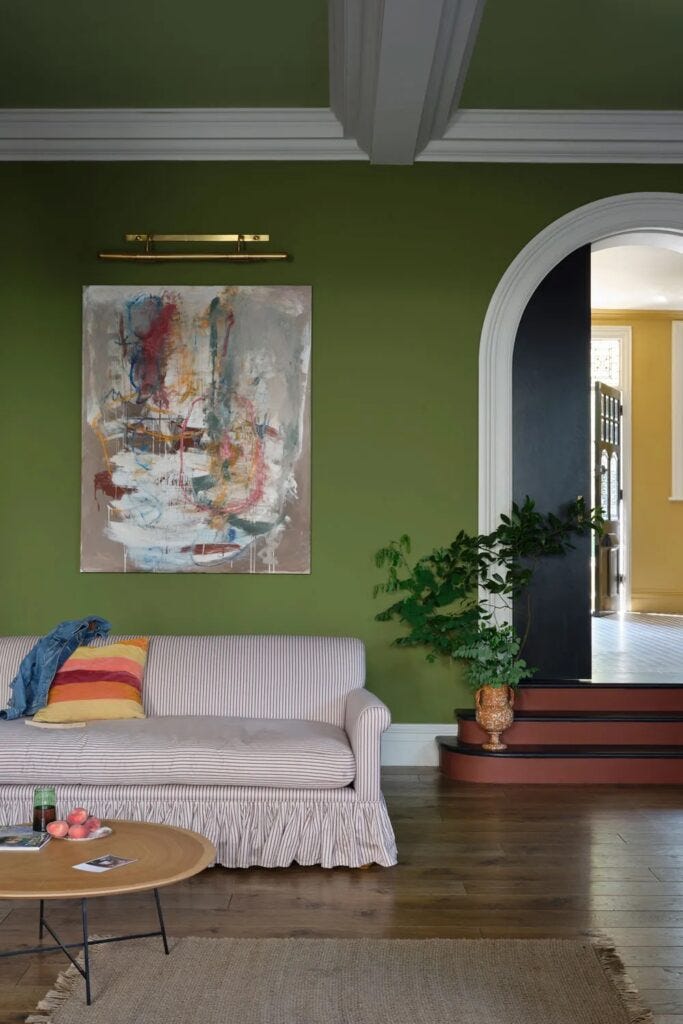
Farrow & Ball Paint
While we’re on colour, my love affair with Farrow & Ball shows no signs of slowing down. My mum discovered the heritage British brand in the 1990s when they first entered the Canadian market, and set about slowly repainting our house in their paint (I think she’s still at it — it’s pricey stuff).
And yes, it was partially the evocative, quirky colour names, but it was also the depth of colour, the subtle undertones, the way the shades shift subtly throughout the day as the light changes. I didn’t realise it at the time, but F&B was shaping my understanding and love of colour long before I consciously turned to interior design.
After moving to the UK and changing careers, I developed a new appreciation for how the colours work in their native home, where the brand’s overall palette — muted and warm-leaning — works so well with the soft, cool British light.
There are other brands I work with, of course, and I often suggest colour-matching paint if budgets need to be reined in, but I still get a small thrill when I reach for my F&B fan decks on a site consult.
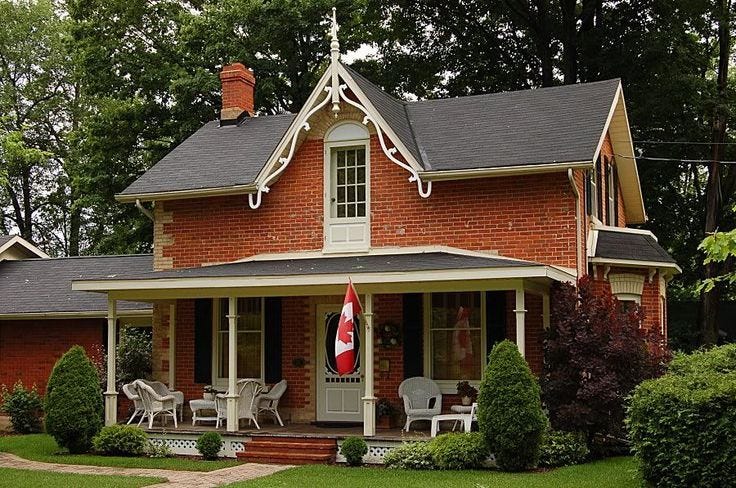
Ontario Vernacular Architecture
If there’s one style of home that might tempt me away from mid-century, it’s this one. I grew up in Ontario, and many childhood road trips wound through small towns lined with grand Victorian houses. The styles that make up so much of Ontario’s architectural character — Queen Anne Revival, Gothic Revival, Edwardian and Italianate — create streets that captivate with history and charm. If nostalgia had an architectural form, small-town Ontario would be it.
In another life, I live in a red brick home with a steeply-pitched roof, white gingerbread trim and the wraparound porch of dreams. I sit outside with my coffee (during the 2.3 weeks a year it’s neither too snowy nor too hot to do so, mind) watching the world go by.
Buying Art
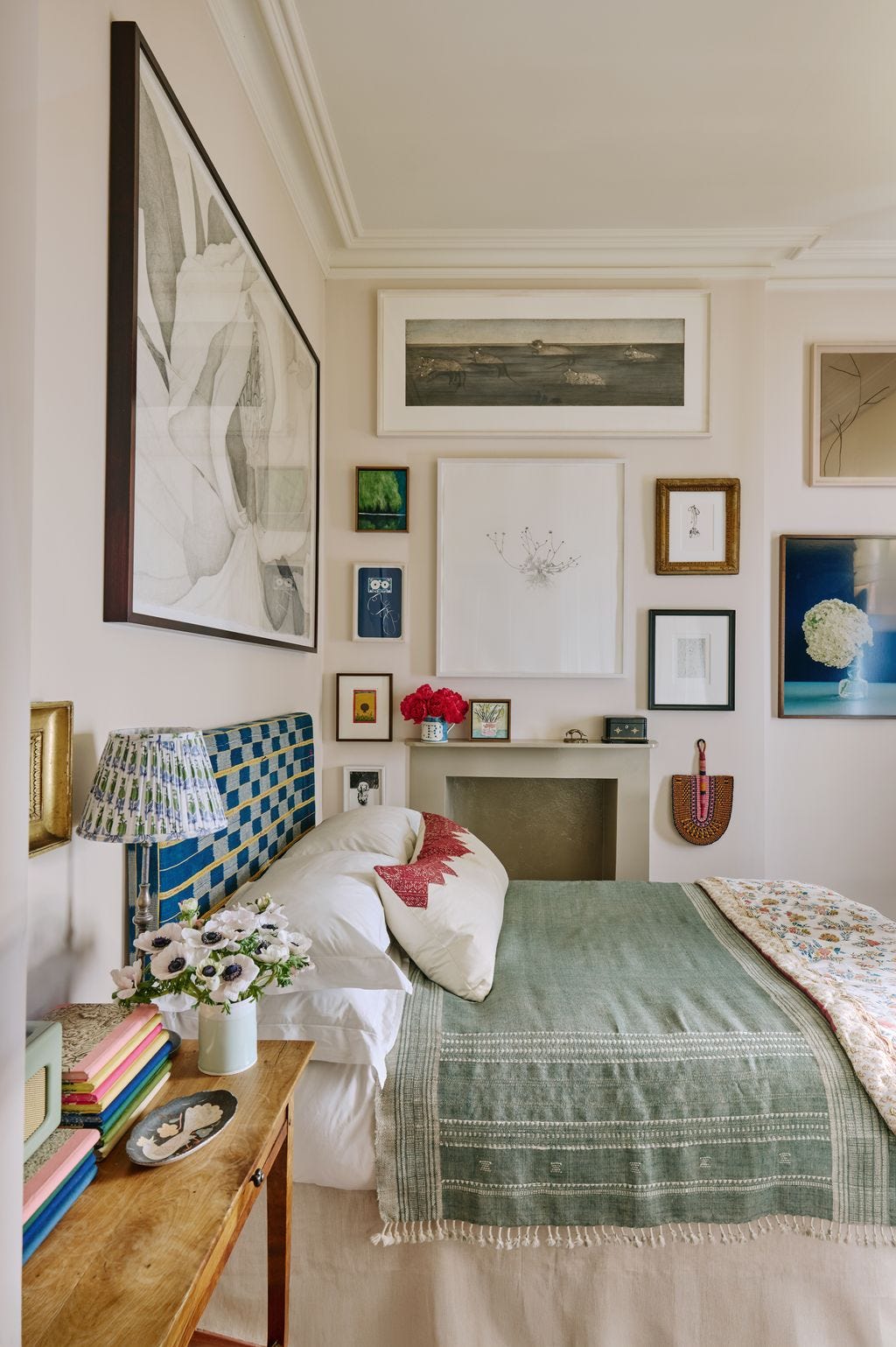
Lately I’ve been thinking I need to make some content addressing the so-claimed “death of the gallery wall” which I see so much about online. Because for those of us with more art than walls, gallery walls are less an aesthetic choice, more a way of life.
I’ve always had an inclination to frame things I love — postcards, exhibition posters, even the occasional beautifully designed book page. Art has never needed to be precious to earn a spot on my wall. As I’ve got older and when budget allows, I’ve also discovered the thrill of supporting working artists by saving for special pieces; so much more satisfying than a new handbag or weekend away.
I don’t want anybody to think I’m dropping bank on new art regularly, I’m definitely not. But browsing my favourite galleries will always be a lovely way to spend a weekend morning, just as art will always be my favourite souvenir to bring home from holiday, ideal way to celebrate a milestone, and preferred gift to receive.
So there we have it, five things in the world of architecture and design that I can’t see myself ever quitting.
I’d love to know what yours are!